LEKTRI.CO: Romania’s EV market maintains solid momentum in July as model diversity accelerates
 Petre Barac
Posted On August 10, 2026
Petre Barac
Posted On August 10, 2026
LEKTRI.CO, one of Romania’s leading players in electric mobility, has released its July 2026 data on the evolution of the country’s electric vehicle market. Following the historic record reached in June, the market returned to a more balanced growth rate in July, while continuing to confirm strong consumer interest in electric mobility and an increasingly diverse range of models available on the Romanian market.
According to data compiled by LEKTRI.CO, 1,526 validated electric vehicles were registered in Romania in July 2026, including 1,399 electric passenger cars and 127 electric light commercial vehicles.
Out of a total of 44,496 vehicles registered across all powertrains, electric vehicles accounted for 3.43% of the market. After deducting the 171 EV deregistrations, the net monthly balance stood at 1,355 electric vehicles, equivalent to 3.05% of total relevant registrations.
Meanwhile, Romania’s estimated active electric vehicle fleet reached 73,307 vehicles.
“After the peak reached in June, it was only natural for the market to return to a pace closer to the average of previous months. What is important, however, is that interest in electric mobility remains steady, while competition is becoming increasingly balanced. We are seeing a market that is no longer decisively driven by one or two models, but by increasingly comprehensive portfolios developed both by established manufacturers and new players. This diversification is one of the clearest signs that Romania’s electric vehicle market is maturing,” said Claudiu Suma, CEO of LEKTRI.CO.
Tesla maintained its leading position in July, although at lower volumes than the record levels recorded in June. The Tesla Model Y ranked first, with 141 units registered, followed by the Tesla Model 3, with 123 units.
BYD continued to strengthen its position in the Romanian market through an increasingly diverse product range. The BYD Dolphin Surf climbed to third place, with 97 units, while the BYD Sealion 7 ranked fourth, with 74 registrations.
The Mercedes-Benz CLA Electric completed the top five, with 53 units, marking one of the strongest performances of the month.
The Hyundai Kona Electric maintained a consistent presence in the rankings, with 46 units, followed by the Mazda 6e, with 41 registrations.
The MG4 Electric entered the group of the fastest-growing models, reaching 40 units, while the Ford Puma Gen-E recorded 38 registrations, confirming the continued expansion of Ford’s electric vehicle offering.
The BYD Atto 2 and Renault Zoe shared tenth place, with 31 units each.
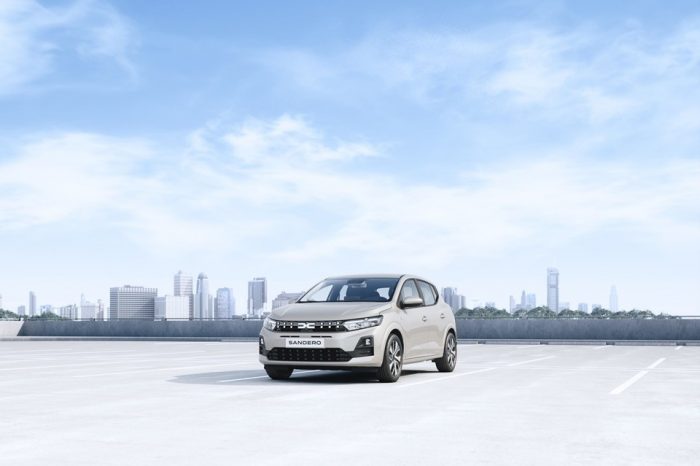
As of July 31, 2026, Dacia retained its position as the leading brand in Romania’s estimated active electric vehicle fleet, with 18,611 electric vehicles and an estimated 25.39% market share.
Tesla followed with 13,594 vehicles, representing an estimated 18.54% share, steadily narrowing the gap with the market leader.
Volkswagen, Renault and Hyundai completed the top five, with 5,898 vehicles (8.05%), 5,466 vehicles (7.46%), and 4,588 vehicles (6.26%), respectively.
The remaining positions in the top 10 were held by Mercedes-Benz (3,206 vehicles), BMW (2,814), Ford (2,791), BYD (1,966) and Nissan (1,436).
BYD’s performance remains one of the most notable developments in the market. The manufacturer is approaching the 2,000-vehicle threshold in Romania’s active electric fleet, further consolidating its position among the country’s leading electric vehicle brands.
Overall, July’s figures point to a Romanian EV market that is moving beyond a phase dominated by a limited number of high-volume models. The growing presence of established manufacturers alongside newer entrants, combined with a broader range of electric models across segments, is contributing to a more competitive and mature market.