Gunter Krasser, Infineon Technologies: “Romania has the capabilities to develop semiconductor chips that compete worldwide”
 Petre Barac
Posted On November 20, 2026
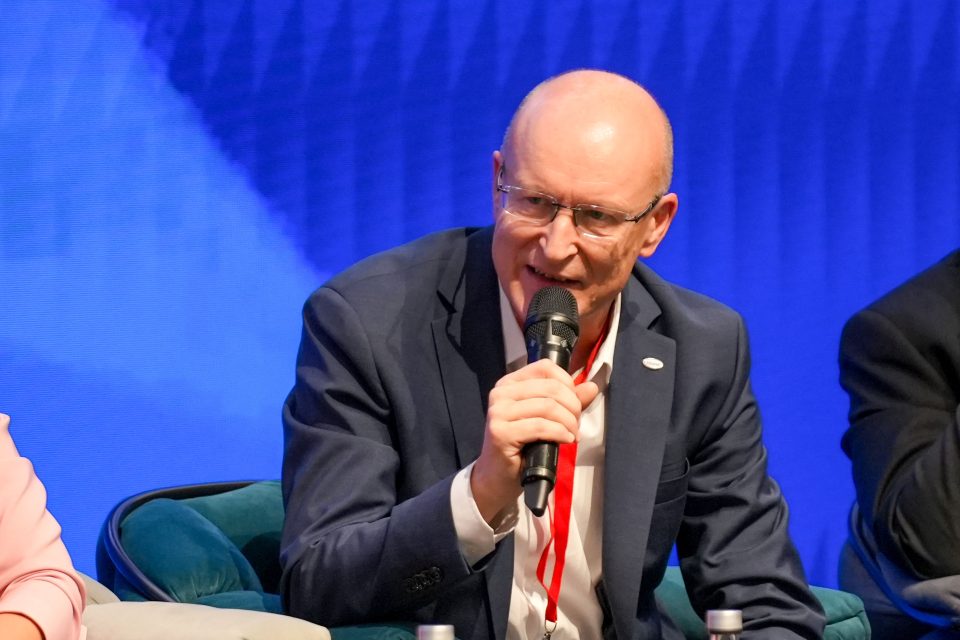
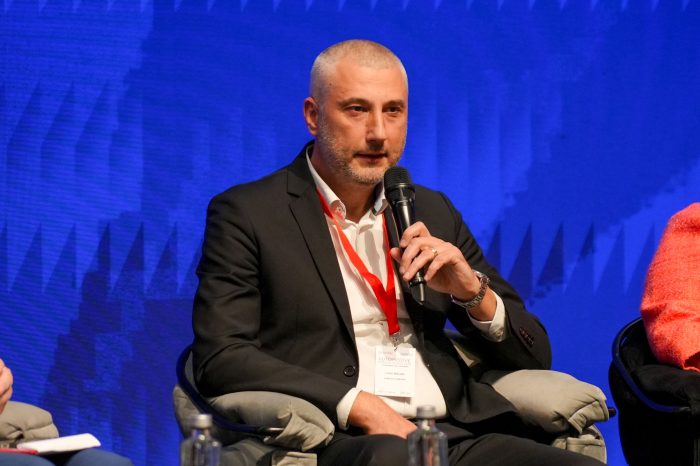
Romania is playing an increasingly important role in Infineon Technologies’ European semiconductor strategy, with the company relying on its local research and development capabilities to support the expansion of chip design and innovation across Europe, according to Gunter Krasser, Vice President and Managing Director of Infineon Technologies Romania.
Speaking at Automotive Forum 2026, organised by Automotive Today and The Diplomat-Bucharest, Krasser highlighted the importance of the European Chips Act in strengthening Europe’s semiconductor manufacturing and development capabilities, while emphasising Romania’s contribution to the industry’s long-term competitiveness.
“The European Chips Act is a very important strategic initiative and programme of the European Union. It connects to manufacturing and, secondly, to further strengthening and scaling Europe’s capabilities to develop semiconductor chips,” Krasser said.
He explained that Infineon’s investment decisions across Europe are aligned with the objectives of the European Chips Act, particularly in expanding manufacturing capacity for advanced semiconductor technologies.
Among the examples he mentioned was the company’s EUR 5 billion investment in expanding its manufacturing cluster in Dresden, Germany, which became operational in the summer of 2026. The facility focuses on smart power technology, combining power and digital functionality on a single chip.
Infineon is also scaling up production of advanced power semiconductors, including silicon carbide and gallium nitride technologies, through investments in Austria and Finland.
Another important development is the company’s participation in a major European joint venture with NXP and Bosch in Dresden, aimed at developing large-scale manufacturing capabilities for highly integrated chips, including microcontrollers and systems-on-chip (SoCs). The initiative is intended to strengthen Europe’s semiconductor supply chain and reduce dependence on manufacturing capacities located primarily in Taiwan.
However, Krasser stressed that expanding Europe’s chip development capabilities is just as important as increasing manufacturing capacity.
In this context, Romania represents an important strategic location for Infineon, building on engineering and research capabilities developed over the past two decades.
“Our strategy for Infineon in Romania is to build on the capabilities that have been developed over the last two decades here in Romania, proven capabilities and also our ability to further scale this up,” Krasser stated.
The company has expanded its research and development footprint in Romania in recent years, extending its operations to three additional cities: Iași, Brașov and Cluj-Napoca.
A major milestone in this expansion is Infineon’s new R&D centre and headquarters in Bucharest, located in the Dimitrie Pompeiu area. According to Krasser, the facility reflects the scale of the company’s local operations and the expertise developed by its Romanian engineering teams.
“Our new R&D centre pretty much reflects the capabilities of our people here and the scale we have reached in the last 20 years to develop semiconductor chips that can really compete on a worldwide level,” he said.
The executive also underlined the connection between research and development activities in Romania and Infineon’s European manufacturing investments, noting that new factories require a continuous pipeline of innovative products.
“All these factories I mentioned before need to be filled with new products. Romania and Infineon’s activities here are a very important aspect of these strategic considerations, and this is where we go forward,” Krasser explained.
While highlighting Romania’s growing contribution to semiconductor development, Krasser indicated that he does not currently foresee Infineon establishing a semiconductor manufacturing facility in Romania, given the company’s strategy of concentrating manufacturing investments in locations where it already has leading global competencies.
His remarks underline Romania’s positioning as an increasingly important European centre for semiconductor research, engineering and innovation, particularly as the EU seeks to strengthen its technological autonomy and resilience in the global semiconductor supply chain.

Trending Now