Liviu Balan, Aumovio Romania: “The future of mobility will be shaped by engineers and AI specialists”
 Petre Barac
Posted On November 20, 2026
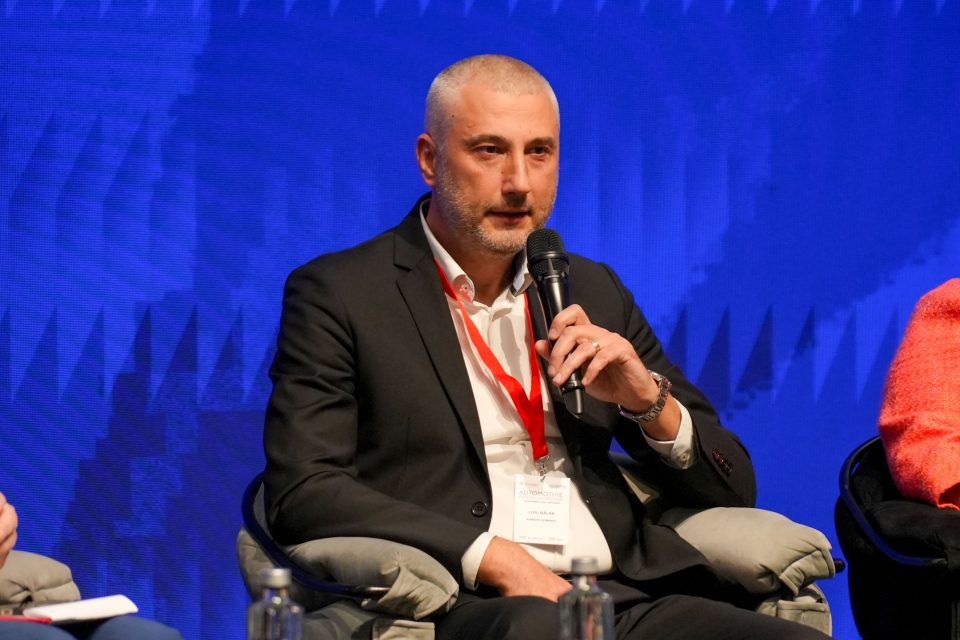
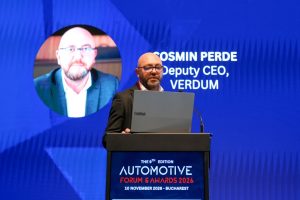
Investment in innovation, strategic partnerships and education are three essential pillars for the future competitiveness of the automotive industry, according to Liviu Balan, Head of Country at Aumovio Romania.
Speaking at Automotive Forum 2026, organised by Automotive Today and The Diplomat-Bucharest, Liviu Balan highlighted the importance of coordinated efforts between companies, academia and educational institutions as the automotive sector undergoes an accelerated transformation.
He identified three main priorities that companies should focus on to remain competitive: investment in innovation and cutting-edge technologies, stronger partnerships across the industry ecosystem, and the development of people and skills.
“First of all, companies need to invest in innovation, technology and, obviously, cutting-edge technologies, especially considering that the automotive industry is going through a period of accelerated transformation,” Balan said.
He pointed out that innovation cannot happen in isolation and that the challenges facing the automotive industry cannot be addressed by individual companies or institutions acting independently.
“The innovation process cannot take place in isolation, and solutions to the challenges we will face in the future cannot be found by a single institution or a single company. They will certainly emerge from ecosystems and partnerships that know how to collaborate,” he stated.
As an example, Balan referred to the Important Projects of Common European Interest (IPCEI), highlighting the benefits of combining local expertise with broader European capabilities.
He also emphasised the importance of involving universities and research institutions in corporate innovation projects. Aumovio seeks to bring academia into its research and development initiatives, with positive results when academic knowledge and perspectives are integrated into technological projects.
“Aumovio tries to involve academia in all its innovation projects, and the results are visible. Wherever we manage to bring academic knowledge and perspectives into research and development projects, the results are remarkable,” Balan explained.
The third pillar identified by the Aumovio Romania executive is investment in people, knowledge and professional competencies.
“The future of mobility will certainly be developed by engineers and artificial intelligence specialists,” he said, underlining the growing importance of technical expertise and AI skills for the automotive sector.
In this regard, Aumovio has been involved in initiatives supporting the development of future specialists, including the National Artificial Intelligence Olympiad.
Balan also highlighted the role of dual education in preparing the next generations of engineers and technical professionals. The company has started contributing to initiatives that connect education with the practical requirements of industry.
One recent example is the inauguration of the dual education campus in Sibiu, which brings together pre-university and university education facilities, laboratories, equipment and technologies designed to provide students with the practical training and skills required by the evolving labour market.
According to Balan, developing a competitive automotive industry requires a combination of investments, partnerships and education, with companies playing an active role in supporting all three areas.
“These are the pillars we need to consider, starting with investment, partnerships and education,” he concluded.

Trending Now