INTERVIEW Alin Ioanes, ROMBAT: “AI has the potential to significantly reshape automotive manufacturing”
 Petre Barac
Posted On September 1, 2026
Petre Barac
Posted On September 1, 2026

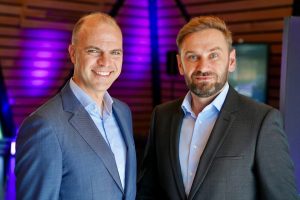
As Romania’s automotive industry enters a period of profound transformation, ROMBAT CEO Alin Ioanes sees both significant opportunities and mounting challenges ahead. Romania’s only automotive battery manufacturer is combining its long-established industrial expertise with investments in advanced technologies, digitalization, renewable energy and new energy-storage solutions, while continuing to expand its international footprint.
With annual turnover of 123 million euros, 694 employees and more than 65% of its production exported to over 45 countries across four continents, ROMBAT is positioning itself as a competitive European manufacturer serving both OEM and aftermarket customers.
In this interview with Automotive Today, Alin Ioanes discusses ROMBAT’s recent performance and growth drivers, the company’s international expansion strategy and its investment priorities for the coming years. He also addresses the role of AI, Automation and Industry 4.0 in the company’s transformation, the development of EFB and AGM battery technologies, and ROMBAT’s ambitions in the energy-storage sector.
From workforce development and reskilling to infrastructure, energy competitiveness and regulatory predictability, the ROMBAT CEO outlines the measures he believes could help Romania strengthen its position as a leading automotive manufacturing and innovation hub in Europe.
Please provide a brief overview of your company in Romania, including annual turnover (latest available fiscal year), number of employees and main business activities
ROMBAT is the sole automotive battery manufacturer in Romania, with a strong industrial heritage and an increasingly international presence. Today, we export more than 65% of our production to over 45 countries across four continents, serving both OEM and aftermarket customers.
Our main activities cover the development and manufacturing of automotive batteries for passenger cars and commercial vehicles, including advanced EFB and AGM technologies, alongside developing solutions addressing evolving mobility and energy needs.
In recent years, ROMBAT has accelerated its transformation through investments in people, production technologies, laboratory and testing capabilities, digitalization and renewable energy.
Latest annual turnover: 123 mil. euro
Number of employees: 694
Our ambition is to build on our Romanian industrial heritage while strengthening ROMBAT’s position as a competitive European manufacturer and a reliable long-term partner for the mobility and energy sectors.
How would you assess your company’s performance over the past year, and what were the main growth drivers?
Our performance reflects both commercial growth and the transformation of the company.
We reached close to 3 million batteries sold annually in 2025. In 2024, we recorded a 23% increase compared with 2023, driven particularly by international markets and the aftermarket but also having good OE partners alongside, for which we manufacture hundreds of thousands of batteries. In 2025, we continued this trajectory, increasing volumes with almost 10% compared with the previous year.
Internationalization has been an important growth driver, with more than 65% of our production currently exported to over 45 countries across four continents.
At the same time, growth has been supported by a more balanced OEM and aftermarket portfolio, optimization of our product mix and distribution channels, strong product availability, closer relationships with our partners and disciplined commercial management.
For us, however, growth is not simply about volume. Our goal is to achieve profitable, sustainable growth while consistently delivering high-quality products and services and remaining agile in responding to evolving customer needs.
What are your business priorities and strategic objectives for the next three to five years?
Our priorities can be grouped around three major directions.
The first is international development. We intend to strengthen existing partnerships and continue entering markets where European manufacturing, quality, flexibility, and service can create a clear competitive, both in current technology and new technologies
The second is technology and operational excellence. We will continue investing in production capabilities, renewable-energy infrastructure, advanced testing and laboratory capabilities, digitalization and product development, while strengthening our collaboration with OEM partners.
The third direction is energy storage. As mobility and energy become increasingly interconnected, we see opportunities to leverage our battery expertise beyond our traditional automotive business.
Across all three directions, our objective is consistent: to innovate faster, operate more efficiently and sustainably, and remain close to our customers.
The automotive industry is evolving rapidly through electrification, AI, automation, connected mobility, and software development. Which technologies are currently shaping your company’s future strategy?
For ROMBAT, the technologies shaping our strategy are those that directly improve product performance, manufacturing efficiency, quality, traceability and customer experience.
Advanced battery technologies such as EFB and AGM remain highly relevant as vehicle architectures and energy requirements continue to evolve, both for internal combustion engine vehicles and BEVs. At the same time, automation, Industry 4.0 solutions, digital traceability and data-driven decision-making are becoming increasingly important across our operations.
A good example is our Heavy-Duty EFB production line, inaugurated in May 2025 following an investment of approximately €3 million, enabling us to address growing demand for advanced battery technologies in commercial vehicles while improving productivity and process stability.
Artificial Intelligence is also becoming an important part of our digital transformation. We are exploring AI-driven solutions such as thermal vision for advanced product quality inspection, predictive maintenance, and AI agents for selected internal processes, with the aim of increasing efficiency, reducing downtime and supporting faster decision-making.
As our operations become more digital and connected, cybersecurity is equally important, with a focus on alignment with NIS2 requirements and TISAX standards.
Our approach is pragmatic: AI, automation and digitalization are tools to build a smarter, more efficient, secure and competitive organization.
What role does research, development, and innovation play within your Romanian operations?
Research, development and innovation are essential to maintaining our competitiveness.
We continue to strengthen our laboratory and testing capabilities in order to accelerate product validation, improve reliability and respond faster to evolving OEM and aftermarket requirements.
Innovation also extends beyond the product itself. It includes manufacturing processes, predictive and preventive maintenance, digital traceability, data analytics and customer-facing solutions.
Our digital warranty solution is a good example. It simplifies warranty processes for car and truck batteries, improves traceability and provides customers with access to a real-time network of partner service centers.
Our objective is to combine decades of industrial expertise with technology, data and increasingly agile development processes.
What are your main investment priorities in Romania over the coming years?
Our investment strategy is focused on strengthening ROMBAT’s long-term industrial competitiveness.
We are investing in production technologies, automation, testing and laboratory capabilities, digitalization, renewable-energy infrastructure, energy efficiency and the development of our people.
The Heavy-Duty EFB production line, inaugurated in 2025 following an investment of approximately EUR 3 million, is part of a broader EUR 10 million investment program covering production capacity, renewable energy, training and facility modernization.
Going forward, we intend to continue strengthening our ability to develop and validate new products faster, improve operational efficiency and deepen our collaboration with OEM customers.
Energy storage is another strategic direction that we are developing as part of ROMBAT’s longer-term evolution. In this context, we are also exploring emerging battery technologies, including sodium-based solutions, assessing their potential applications and role in the future energy-storage landscape.
In this area, we are already in discussions with several strategic partners to explore the development of a product portfolio tailored to the specific needs and requirements of the European market. This approach reflects our commitment to staying close to technological developments and building relevant, competitive energy solutions for the future.
Which factors make Romania an attractive destination for automotive investments, and what improvements would further strengthen its competitiveness?
Romania has several important strengths: a well-established automotive ecosystem, a strong industrial tradition, experienced people and significant manufacturing capabilities.
However, the competitive equation is changing. Cost competitiveness alone will not be sufficient to secure Romania’s position in the next generation of the European automotive industry.
The country needs to compete increasingly through productivity, technology, innovation, skills and sustainability.
I believe Romania has the opportunity to move further up the value chain—from being recognized primarily as a strong manufacturing location toward becoming an increasingly important contributor to engineering, technology and higher-value-added automotive solutions.
Further investment in infrastructure, technical education and digital capabilities, together with stronger collaboration between industry, universities and public institutions, would significantly reinforce this position.
Recruiting and retaining skilled professionals remains a challenge across the industry. How is your company addressing workforce development?
People are a fundamental part of ROMBAT’s transformation.
Technology and equipment can improve processes, but ultimately people determine whether those investments create sustainable value.
Our approach is therefore focused on developing capabilities internally, empowering teams and creating an environment where people understand not only what they do, but also how their work contributes to customer value and the company’s long-term objectives.
We believe that attracting talent is only one part of the equation. Retaining and developing people requires meaningful opportunities to learn, grow and contribute.
As the automotive industry changes, workforce development is becoming not simply an HR priority, but a strategic business priority.
How do you support continuous learning, leadership development, and the reskilling of employees in an increasingly digital industry?
Continuous learning is essential in an industry where technologies, customer requirements and ways of working are evolving rapidly.
Our leadership philosophy is based on managing by values: aligning decisions, behaviors and organizational culture around shared principles rather than relying exclusively on hierarchy and control.
We encourage responsible autonomy, transparent communication and continuous development.
At the same time, our investments in new production technologies, digitalization and advanced testing capabilities require us to continuously develop technical and digital competencies across the organization.
Reskilling is therefore closely connected to our investment strategy. When technology changes, people need to evolve with it.
For me, this is one of the most important principles of transformation: technology can transform processes, but people transform organizations.
What do you consider to be the biggest opportunities and challenges facing Romania’s automotive industry over the next five years?
The next five years will bring both significant opportunities and significant pressure.
Electrification, digitalization, automation, energy storage and the transformation of European supply chains create opportunities for Romania to attract investment and move toward higher-value-added activities.
AI, in particular, has the potential to significantly reshape automotive manufacturing — from predictive maintenance and automated quality inspection to process optimization, supply-chain planning and faster product development. Companies that are able to integrate AI effectively into their operations will have an important competitive advantage in terms of productivity, quality and speed of decision-making.
At the same time, the industry will face increasing pressure from energy and raw material costs, regulatory requirements, geopolitical uncertainty, changing mobility technologies, skills shortages and competition from lower-cost markets.
For Romania, the central challenge will be to transform its strong manufacturing base into an ecosystem increasingly driven by technology, productivity and innovation.
I believe the opportunity is significant. Romania already has industrial expertise and an established automotive ecosystem. The question is how quickly we can build the capabilities required for the next generation of mobility and what kind of support companies who are willing to invest will have from the Government.
If you could recommend three measures that would strengthen Romania’s position as a leading automotive manufacturing and innovation hub, what would they be?
I would focus on three priorities.
First, developing the skills required by the next generation of automotive. Stronger partnerships between companies, universities, knowledge-sharing collaboration and public institutions are essential to develop competencies in automation, digitalization, engineering and emerging mobility technologies.
Second, accelerating infrastructure and industrial modernization. Competitive transport and energy infrastructure, access to renewable energy and support for digital and technological investment are increasingly important factors in industrial location decisions.
Third, creating a more predictable and innovation-oriented business environment. Long-term investment requires regulatory predictability, faster implementation processes and mechanisms that encourage research, development and collaboration between industry and academia.
Romania already has an important automotive manufacturing base. The next objective should be to increase the value created here,to manufacture, but also to develop, innovate and build expertise.
That is how Romania can strengthen its position in the European automotive industry over the next decade.