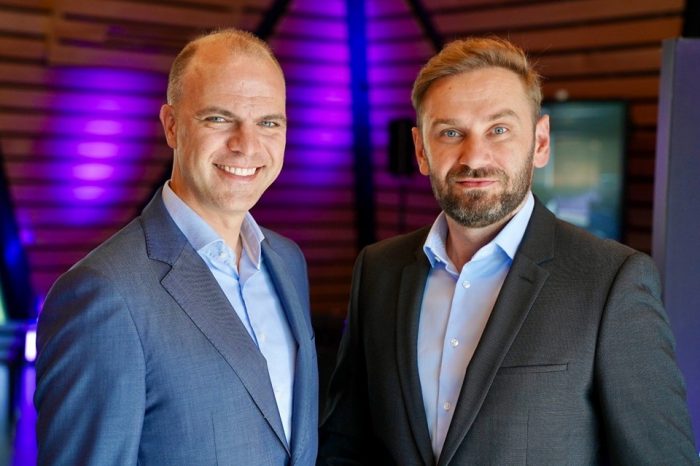
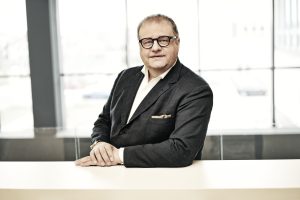
Alin Ioanes, Rombat: “Romania risks falling behind without faster decision-making”
 Petre Barac
Posted On May 28, 2026
Petre Barac
Posted On May 28, 2026

At an event marking the 30th anniversary of the Romanian automotive manufacturers’ association ACAROM, Alin Ioanes, CEO of Rombat, warned that the automotive industry is increasingly defined by speed — not only in corporate decision-making, but also in the responsiveness of public institutions and industrial policy.
“We live in an era where we depend very much on speed — speed of reaction, speed of implementation, speed of change,” said Alin Ioanes. “As companies, we have this fast reaction to competition, trying to optimize everything related to costs, processes, etc. But there are two sides of competitiveness: our internal one and the external one — the environment we operate in, the government, the country where we conduct our activity.”
He noted that the same level of rapid response is not visible from public authorities, particularly in relation to long-standing issues such as energy costs and broader competitiveness challenges.
“We do not see the same fast reaction, the same speed from our governing institutions,” he said. “We have been talking about energy costs for so many years, and very little has happened.”
He also pointed to the slow pace of change in Romania, warning that delays are accumulating over time and could lead to significant bottlenecks.
“At the same time, things are moving quite slowly, in conditions where we are not talking about months, but maybe a year or more. A moment may come when we will be in a significant impasse.”
Ioanes stressed that workforce skills are changing rapidly, driven by automation and artificial intelligence, and suggested that traditional discussions about dual education may no longer be sufficient.
“There are competitors operating fully automated production lines. There are so-called ‘dark factories’,” he said. “We must look at this perspective as well.”
He added that large companies currently rely mainly on state aid schemes, which are often tied to employment levels and other limited criteria.
“At our company level, as a large organization, you only have support through state aid, which is correlated with the number of employees and similar conditions,” he noted.
Ioanes also said companies are increasingly forced to look for alternative markets as competitiveness becomes harder to maintain globally.
“We are in a period where we are looking with urgency at what alternatives we have, which markets to reposition ourselves in,” he said. “It is not easy to find competitiveness in any other market.”
Operating across four continents and more than 40 countries, he concluded that global competitiveness is declining year by year, making speed of reaction and positioning more important than ever.