Volkswagen Group to invest one billion euros in AI by 2030
 Petre Barac
Posted On September 9, 2025
Petre Barac
Posted On September 9, 2025

Volkswagen Group intends to invest up to one billion euros in the expansion of artificial intelligence (AI) by 2030 as part of its existing investment planning. The company announced this during the IAA Mobility trade fair.
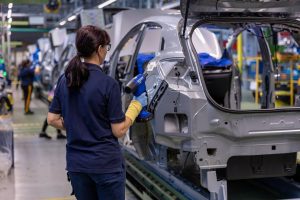
The focus is on AI- supported vehicle development, industrial applications, and the expansion of high- performance IT infrastructures. The goal is to make vehicles and innovations available to customers even faster. At the same time, Volkswagen expects sustainable efficiency gains through the consistent use of AI – and a strengthened, more resilient position in the global technology competition.
“With artificial intelligence, we are igniting the next stage on our path to becoming the global automotive tech driver”, says Hauke Stars, Member of the Board of Management for IT at the Volkswagen Group. “AI is our key to greater speed, quality, and competitiveness – across the entire value chain, from vehicle development to production. Our ambition is to accelerate our development of attractive, innovative vehicles and bring them to our customers faster than ever before. To achieve this, we deploy AI with purpose: scalable, responsible, and with clear industrial benefits. Our ambition: No process without AI.”
Artificial intelligence is already being used across all key business domains of the Volkswagen Group. Today, more than 1,200 AI applications are already active throughout the Group, with several hundred more in development or nearing implementation. In the long term, the Volkswagen Group expects efficiency gains and cost avoidance opportunities totaling up to four billion euros by 2035 – enabled by the consistent and scalable use of AI across the entire automotive value chain.
In vehicle development, for example, the Volkswagen Group is building an AI-powered engineering environment together with its partner Dassault Systèmes – for all Group brands and across all regions. It is designed to support engineers through virtual testing and component simulations, significantly accelerating development processes. Alongside other initiatives, this collaboration aims to helping to shorten the product development cycle for Group brands to 36 months – or less – making it at least 25 percent (around 12 months) faster compared to today.