Stellantis installed photovoltaic panels across 27 manufacturing sites in Europe, with over 500 MW capacity
 Petre Barac
Posted On June 5, 2026
Petre Barac
Posted On June 5, 2026
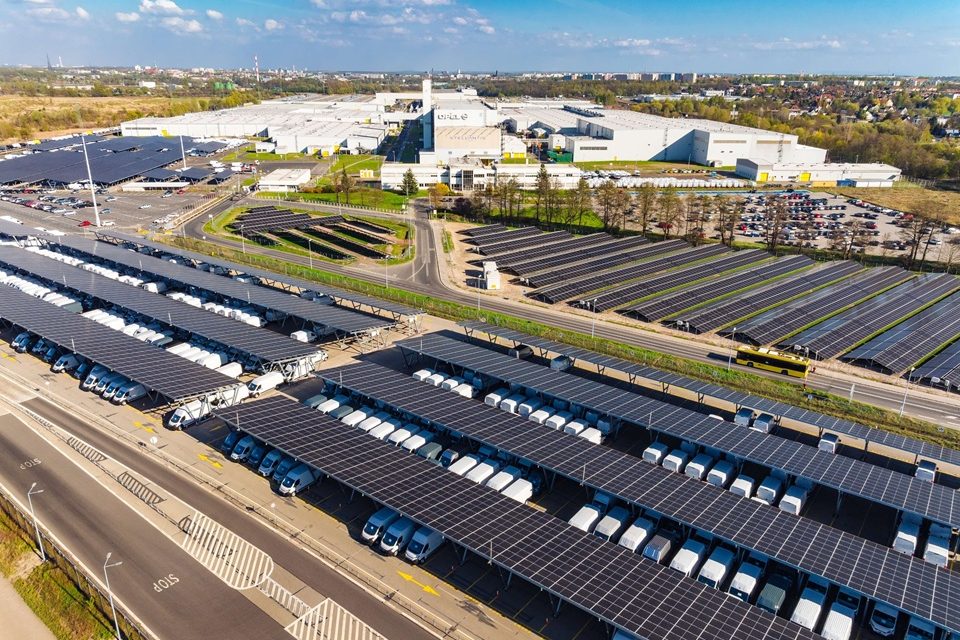
Stellantis is accelerating the rollout of renewable energy generation and storage solutions across its European manufacturing network.
Stellantis’ European manufacturing sites now source 68% of their electricity from decarbonized energy. The company aims for on-site self-consumption to account for 31% of energy used across its European plants in 2026, with leading sites targeting as much as 80%.
“Energy management is a critical enabler of our decarbonization roadmap. By expanding on‑site renewable solutions — including solar, wind, geothermal and biomass — together with energy storage, we are reducing emissions, improving energy autonomy and reinforcing the competitiveness of our manufacturing footprint,” said Francesco Ciancia, Global Head of Manufacturing at Stellantis.
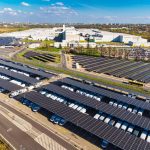
So far, photovoltaic projects have been completed or are underway at 27 European manufacturing sites, representing more than 500 MW of installed capacity. At sites such as Tychy (Poland), self-consumption could reach around 60% by the end of 2026. In Zaragoza (Spain), where a hybrid system combining photovoltaic power and on-site wind turbines is already operating, self-consumption could rise to as much as 80% by year-end.
In parallel with photovoltaic deployment, Stellantis is rolling out Battery Energy Storage Systems (BESS) to further optimize energy usage and support grid stability across its manufacturing sites.
The BESS program will cover 20 manufacturing sites across Europe, with a total installed storage capacity of approximately 200 MWh, rolled out in two phases. The first wave is already at an advanced stage, with BESS expected to be operational at seven plants by 2026, while deployment across the remaining sites is planned to be completed within a three‑year timeframe.